
Bangladesh
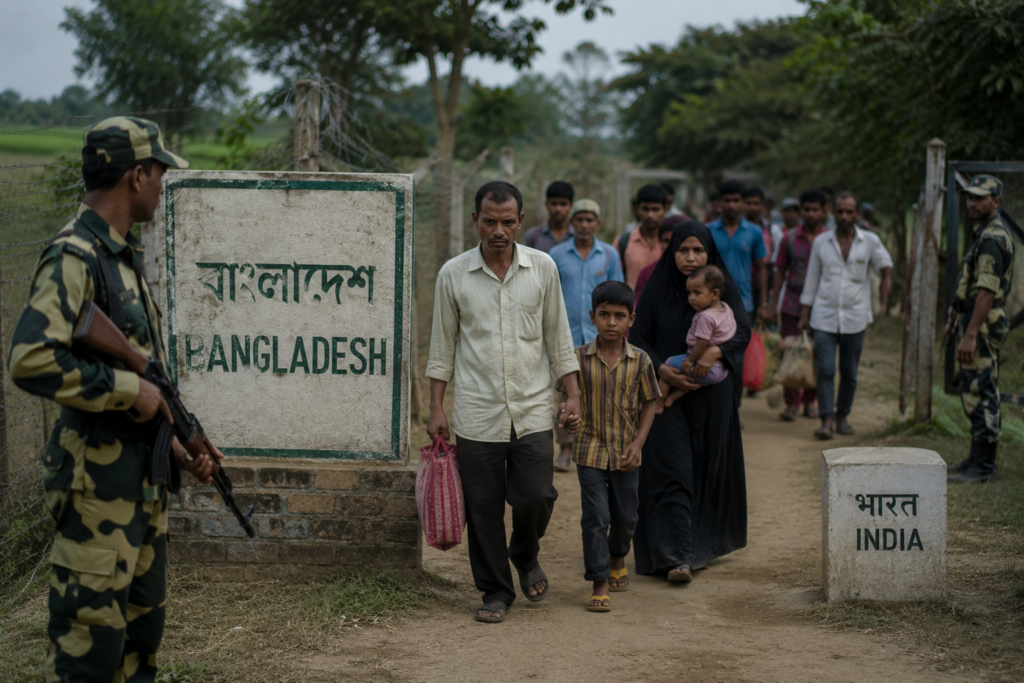
India-Bangladesh Border Push-Ins Raise Human Rights Alarm
|
Getting your Trinity Audio player ready...
|
The India-Bangladesh relationship is facing another sensitive test as reports of forced border push-ins raise serious human rights concerns.
Bangladesh has accused Indian authorities of trying to force people across the border without proper process. Human Rights Watch has also alleged that ethnic Bengali residents, mostly Muslims, have been expelled or pushed toward Bangladesh without basic due process.
This is not only a border-security issue. It is a human issue.
Why the Border Tension Matters
India and Bangladesh share one of the longest land borders in the world. Migration, smuggling, trafficking, political tension, and identity questions have made the frontier difficult to manage for decades.
But no border problem can justify treating vulnerable people as disposable.
If someone is accused of being an undocumented migrant, there must be a fair legal process. Their identity must be checked properly. They must have the right to respond. Families should not be pushed into uncertainty, fear, or danger without clear evidence and legal protection.
Vulnerable Muslims Need Due Process
The most worrying part of the current allegation is that many of the people affected are Bengali-speaking Muslims.
That raises a difficult question: are people being treated as illegal migrants because of evidence, or because of language, ethnicity, poverty, or religion?
A democratic state must not use identity as a shortcut for suspicion. Bengali-speaking Muslims, whether in India or Bangladesh, deserve the same legal protection as any other group.
If a person is truly a foreign national, the case should be handled through official diplomatic and legal channels. If a person is an Indian citizen or legal resident, pushing them toward Bangladesh would be a grave injustice.
Bangladesh Must Respond Firmly but Wisely
Bangladesh has a responsibility to protect its border and its sovereignty. It also has a responsibility to protect vulnerable people from being trapped between two states.
Dhaka should document every incident, demand transparent verification, and raise the matter through diplomatic channels. Border Guard Bangladesh should continue lawful vigilance, but the response must remain disciplined and humane.
The issue should not become a communal war of words. It should become a demand for due process, evidence, and human dignity.
India Must Protect Its Own Standards
India often presents itself as the world’s largest democracy. That claim carries responsibility.
If Indian authorities are removing people without proper legal safeguards, India’s democratic credibility is damaged. A strong state should not be strong only against the poor, the undocumented, or the politically weak.
The rule of law means that even unpopular or vulnerable people have rights.
Trust Between Neighbours Is at Risk
India and Bangladesh need each other. Their relationship affects trade, security, water, migration, energy, regional stability, and the lives of millions of ordinary people.
But trust cannot survive if border management becomes a tool of fear.
The current allegations should be investigated seriously. Both governments should cooperate, verify identities lawfully, protect vulnerable families, and prevent forced push-ins that leave people stranded.
A border can separate two states. It should not erase human dignity.