
Science and Technology
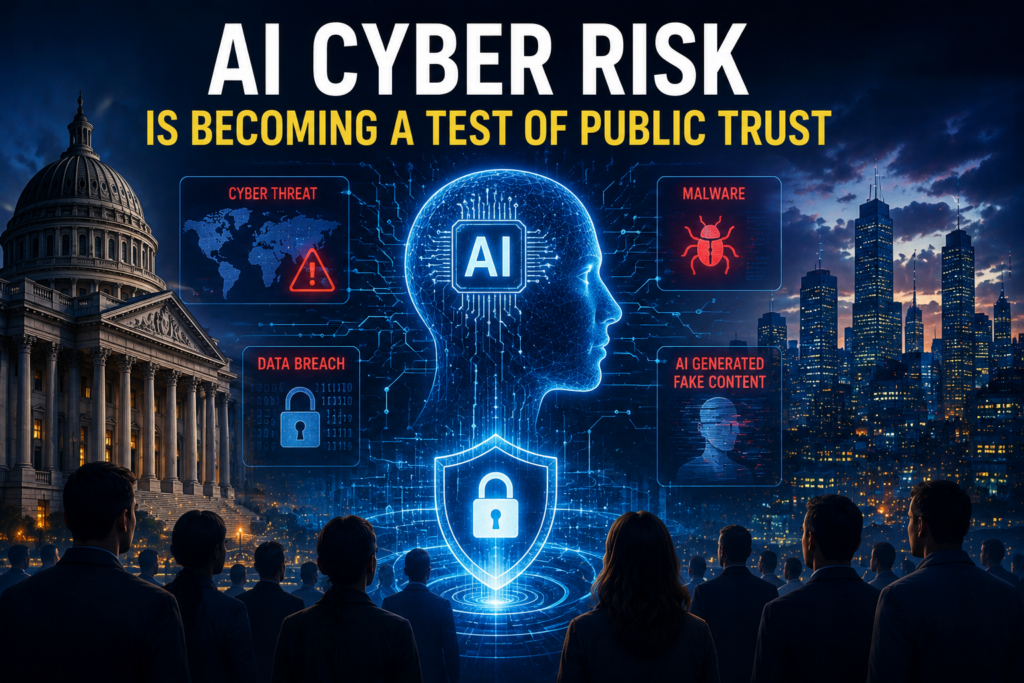
AI Cyber Risk Is Becoming a Test of Public Trust
|
Getting your Trinity Audio player ready...
|
Artificial intelligence is no longer only a story about productivity, creativity, or convenience. It is now becoming a question of public safety.
As AI systems become more powerful, governments and security experts are paying closer attention to how these tools could be used in cyberattacks, misinformation campaigns, fraud, surveillance, and automated manipulation. The concern is not that technology itself is evil. The concern is that powerful tools can be used badly when there is not enough responsibility, oversight, or public understanding.
For years, the public conversation around AI focused on chatbots, image generators, automation, and job disruption. Those issues still matter. But the next stage is more serious. AI can also help people find weaknesses in software, create convincing fake messages, write malicious code, imitate trusted voices, and scale attacks faster than humans could manage alone.
This does not mean society should panic. Fear alone is not a strategy. But pretending there is no risk is also dangerous.
The real issue is trust.
People need to know that governments, companies, and technology developers are taking AI security seriously. Businesses need stronger protection. Public institutions need better preparation. Citizens need clearer information about how AI is being used and what risks it may create.
Cybersecurity can no longer be treated as a hidden technical problem for specialists only. It is now part of public life. A successful attack on hospitals, banks, transport systems, schools, or government services can affect ordinary people directly.
That is why AI cyber risk is becoming a test of public trust.
If companies release powerful systems without enough safeguards, people may lose confidence in innovation. If governments respond with secrecy or excessive control, citizens may lose confidence in public institutions. The challenge is to protect society without destroying openness, creativity, and freedom.
Good AI governance should not be about stopping progress. It should be about making progress safer.
That means stronger testing before release, clearer rules for high-risk systems, better cyber education, responsible reporting, and cooperation between governments, researchers, companies, and civil society.
The future of AI will not be judged only by how intelligent these systems become. It will also be judged by whether human societies can use them wisely.
Technology is moving fast. Trust must not be left behind.