
Culture
Western Culture and Asian-African Immigrants Are Reshaping Identity
|
Getting your Trinity Audio player ready...
|
Western culture is not standing still. It is changing every day in streets, schools, workplaces, restaurants, families, music, fashion, language, and public debate.
Asian and African immigrants are part of that change.
They arrive with different histories, religions, languages, memories, food traditions, family values, business habits, and ideas about community. Over time, these influences do not simply stay separate. They meet Western culture, challenge it, enrich it, and sometimes create tension inside it.
Culture Is Not a Museum
Culture is often spoken about as if it is fixed. But culture has always changed.
British, European, and North American societies were shaped by trade, empire, migration, religion, war, industry, education, and global media. Today, immigration is one of the strongest forces shaping everyday culture.
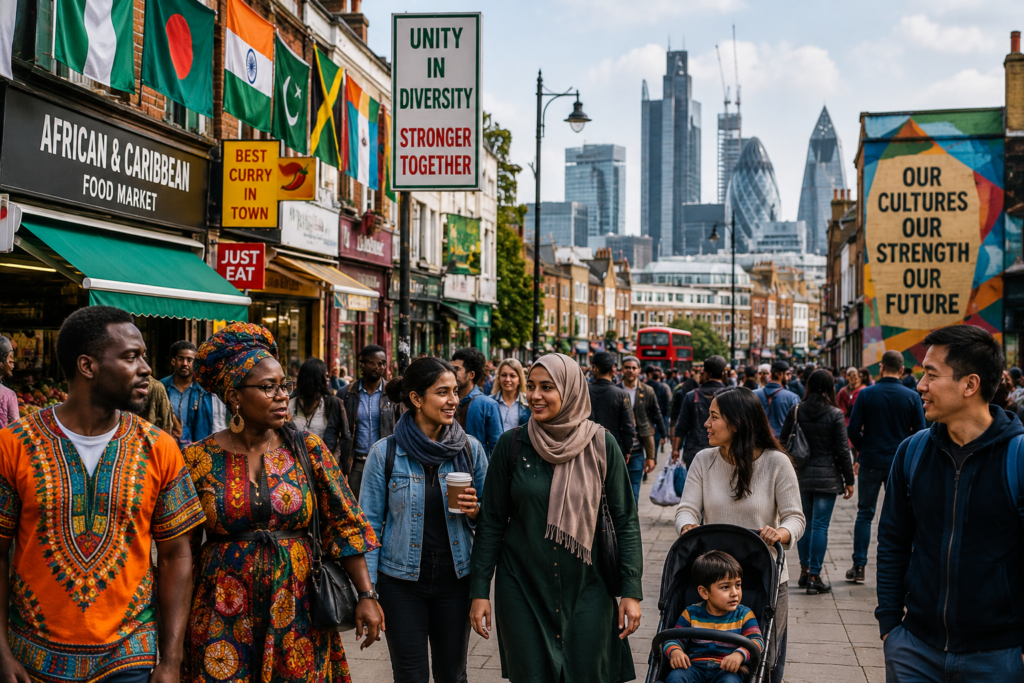
Asian and African communities bring visible changes. Restaurants, shops, mosques, churches, temples, festivals, music, clothing, languages, and family networks become part of city life.
But the deeper change is not only visible. It is also emotional and social.
It changes how people understand belonging.
Immigrants Bring More Than Labour
Immigrants are often discussed only through economics, borders, jobs, housing, or public services. Those debates matter, but they are not the whole story.
Asian and African immigrants also bring ambition, memory, faith, sacrifice, humour, creativity, and resilience.
Many work long hours. Many start small businesses. Many support relatives both in the West and in their countries of origin. Many raise children who grow up between cultures, speaking one language at home and another outside.
These families do not simply “enter” Western culture. They help remake it.
The Challenge of Integration
Integration does not mean erasing identity. It should not mean that immigrants must abandon everything from their past.
A healthy society should allow people to become part of a country while still respecting their heritage.
But integration also requires honesty. Immigrants need opportunities to learn the language, understand the law, participate in civic life, and build relationships beyond their own communities.
Host societies also have responsibilities. They must reduce discrimination, protect equal rights, and avoid treating immigrants as permanent outsiders.
Both sides must do the work.
Tension Is Real, but Fear Is Not the Answer
Cultural change can create anxiety. Some people worry that old traditions are disappearing. Others feel that immigrants are judged unfairly, blamed too easily, or asked to prove belonging again and again.
These tensions should not be ignored.
But fear is not a serious cultural policy. Blaming entire communities does not solve anything. It only creates distance.
The better answer is open conversation, fair laws, shared public spaces, better education, and a stronger sense of equal citizenship.
A New Western Identity
The West of the future will not look exactly like the West of the past.
It will be more mixed, more multilingual, more religiously diverse, more secular in some places, more connected to Asia and Africa, and more shaped by children of immigrants who belong to more than one cultural story.
That does not have to be a threat.
It can be a strength if society chooses fairness, responsibility, and respect.
Western culture and Asian-African immigrants are not two separate worlds forever facing each other. In many cities, they are already becoming part of the same story.
The real question is whether that story will be shaped by fear or by confidence.