
Culture
Western Culture, Immigrant Identity and the Fear of Change
|
Getting your Trinity Audio player ready...
|
Culture is never as fixed as people imagine.
Every generation thinks the world is changing too fast. Every society worries that something familiar is disappearing. Every country has people who look at immigration, new languages, new foods, new religions and new ways of living, and feel that their culture is under threat.
That fear is real.
But fear is not always truth.
Western culture itself was never one single thing. It was shaped by Greek philosophy, Roman law, Christianity, Enlightenment thinking, science, trade, empire, migration, war, art, rebellion and constant argument. It changed through contact with the world. It borrowed, absorbed, rejected and reinvented.
So when people say “Western culture is changing,” the honest answer is: it always has.
Immigration Changes Society
Immigration does change a country. Pretending it does not is dishonest.
New communities bring different habits, languages, faiths, family structures, foods, businesses and political concerns. Sometimes this creates beauty. Sometimes it creates tension. Sometimes people misunderstand each other. Sometimes communities live side by side without truly mixing.
These problems should be discussed openly.
But discussion should not become hatred.
Immigrants are not a single group. Some are doctors, builders, cleaners, drivers, students, carers, business owners, writers, refugees, parents and children. Some are deeply religious. Some are secular. Some are conservative. Some are liberal. Some integrate quickly. Some struggle. Some contribute quietly for decades and are still treated as outsiders.
A serious society must be able to hold two truths together: immigration can create pressure, and immigrants are human beings.
The Fear of Losing Identity
Many people who worry about immigration are not always motivated by hate. Some are afraid of losing home.
They see their neighbourhood changing. They hear languages they do not understand. They feel that old customs are disappearing. They worry that schools, housing, healthcare and public services cannot cope. They feel ignored by politicians who speak about diversity but do not always speak about pressure.
Those concerns should not be dismissed.
But they should also not be exploited.
The danger begins when ordinary fear is turned into blame. When every social problem is placed on immigrants. When poverty, housing shortages, low wages and weak public services are explained only through foreign faces. When politicians use culture as a weapon instead of fixing real problems.
Culture panic is often easier than economic honesty.
Immigrants Also Carry Fear
Immigrants are often described as if they only bring change. But they also experience change.
They leave parents, languages, streets, memories and familiar ways of life. They enter countries where they may be judged by accent, name, clothing, religion or skin colour. They may work hard and still feel unwanted. Their children may grow up between two worlds, never fully accepted by either.
This is especially true for many Asian, African and Middle Eastern immigrant families in Europe. They may try to preserve culture at home while adapting outside. Their children may speak one language in school and another at home. They may carry family expectations while trying to build their own identity.
That tension can be painful.
Integration is not only about immigrants changing. It is also about society making space for honest belonging.
Culture Needs Confidence, Not Fear
A confident culture does not panic every time it meets difference.
It does not need to erase minorities to survive. It does not need to force everyone to look, eat, pray or speak the same way. It can defend freedom, equality, law and human rights while still allowing cultural variety.
But confidence also requires standards.
A free society should not tolerate forced marriage, honour-based abuse, religious intimidation, antisemitism, anti-Muslim hatred, racism, homophobia, misogyny or violence in the name of culture. Not from immigrants. Not from natives. Not from anyone.
Human rights must come before cultural excuses.
This is where both sides must be honest. Western societies should not use “culture” to hide racism. Immigrant communities should not use “tradition” to protect abuse or silence dissent.
People matter more than traditions.
The Future Will Be Mixed
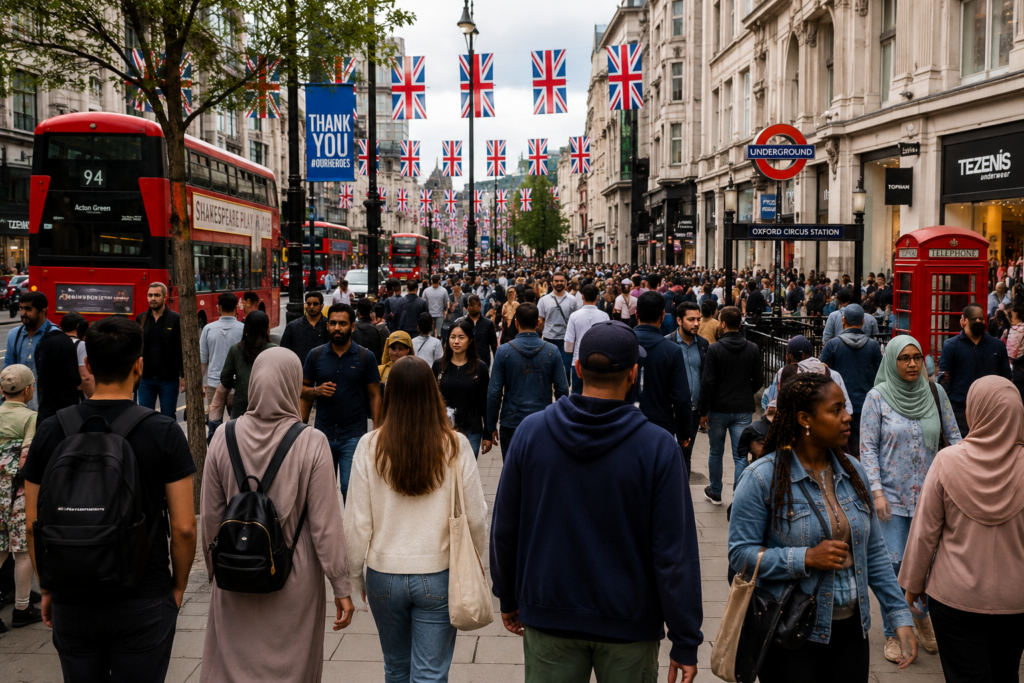
The future of Western cities will be mixed, whether people like it or not.
London, Paris, New York, Toronto, Berlin and many other cities are already shaped by migration. Their music, food, business, sport, language and politics are influenced by many communities. This can create energy and creativity. It can also create conflict if fairness, housing, education and social trust are ignored.
The answer is not fantasy.
No country can return to a perfectly pure past, because that past never truly existed. But no country can build a healthy future by pretending identity does not matter.
People need roots. They also need bridges.
A mature society should protect freedom of speech, secular law, equal rights and public safety. It should also allow people from different backgrounds to belong without being forced to erase themselves.
Belonging Must Be Shared
The real question is not whether culture will change.
It will.
The real question is whether that change will be shaped by fear or by fairness.
A society built on fear will turn neighbours into enemies. It will blame outsiders for every failure. It will make immigrants defensive and natives resentful. It will create silence instead of trust.
A society built on fairness will still have arguments. It will still have difficult conversations. But it will protect equal rights, demand shared responsibilities and recognise the humanity of everyone involved.
Western culture does not need to die because immigrants arrive.
Immigrant identity does not need to disappear because people move West.
The better answer is harder but more honest: build a society where freedom is protected, abuse is challenged, difference is allowed and belonging is shared.
Culture should not be a prison.
It should be a living conversation.